Cyprus Driving Side for US Visitors Made Simple
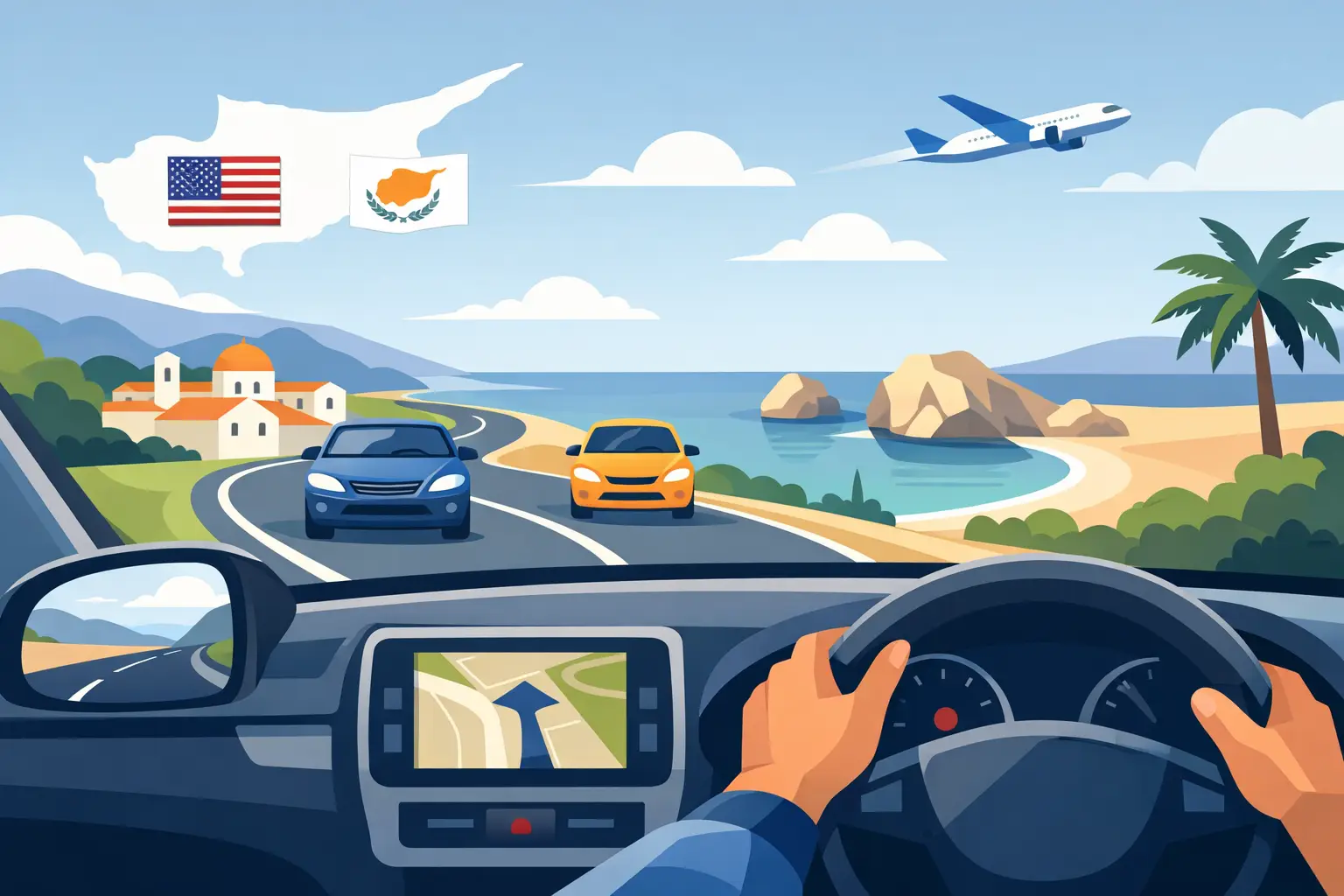
You have just landed at Larnaca or Paphos, picked up your rental car, and reached the first roundabout. The most important thing to remember is simple: the Cyprus driving side is the left. Traffic keeps left, the steering wheel is on the right, and roundabouts run clockwise.
For US visitors, that can feel unfamiliar for the first few miles. But Cyprus is a practical place to drive once you understand the basics. Roads connect the coast, villages, mountain areas, and major cities efficiently, and an automatic rental car removes one major adjustment from the equation.
Cyprus driving side: drive on the left
Cyprus follows the same side of the road as the United Kingdom. On a two-lane road, stay in the left lane. When turning at an intersection, make your left turn into the nearest lane. A right turn requires crossing oncoming traffic, so take extra care and wait for a clear, safe gap.
The driving position can initially feel strange because the driver sits on the right side of the car. Your first instinct may be to look toward the right when checking traffic, especially when leaving a parking space or pulling into a road. Pause, look both ways deliberately, and remind yourself: keep the car and your body closer to the left edge of the road.
The highest-risk moments are usually not open highways. They are quiet exits from hotels, gas stations, beach parking areas, and small village streets, where drivers can briefly revert to their usual habits. A useful reminder is to say “left side” before you move off until it becomes automatic.
Roundabouts are where most visitors need a minute
Roundabouts are common throughout Cyprus, particularly near airports, city entrances, and busy junctions. Traffic approaching the roundabout gives way to vehicles already circulating. You travel clockwise, not counterclockwise.
If you are taking the first exit, position yourself in the left lane where road markings allow it. For later exits, follow lane arrows and signs before entering. Do not panic if you miss your turn. Continue safely around the roundabout and take the next opportunity rather than cutting across lanes.
This is one reason an automatic car is especially helpful for first-time drivers in Cyprus. You can focus on lane position, traffic, signs, and roundabouts without also managing a manual transmission with your left hand.
Use your passenger as a second set of eyes
If you are traveling with someone, give them a clear job for the first day. They can watch lane markings, call out the correct exit at roundabouts, and remind you to keep left after stops. It sounds basic, but it makes airport-to-hotel driving noticeably calmer.
Road signs, speeds, and everyday rules
Road signs are generally easy for American visitors to follow, but distances and speed limits are shown in kilometers, not miles. A speed of 50 km/h is about 31 mph, while 100 km/h is about 62 mph. Your rental car's speedometer will display kilometers per hour, often alongside smaller mph markings.
Always follow posted limits, particularly near schools, towns, roadworks, and tourist areas. Main highways are usually straightforward, but mountain roads can be narrow, winding, and slower than they appear on a map. Allow more time than your navigation app suggests when traveling through the Troodos region or visiting smaller inland villages.
Seat belts are required for drivers and passengers. Children need appropriate child restraints, so arrange these in advance if you are traveling as a family. Using a handheld phone while driving is not worth the risk. Set your route before moving, use hands-free navigation, or ask your passenger to manage directions.
Cyprus takes drink-driving rules seriously. The sensible approach is uncomplicated: if you are driving, do not drink. Taxis and local transport are better choices for evenings when you plan to have alcohol.
Parking without unnecessary stress
Parking rules vary by area, and curb markings matter. Yellow lines commonly restrict stopping or parking, while paid parking is widely available in central areas, popular beaches, marinas, and tourist districts. Check signs before leaving the car, even if other vehicles are parked nearby.
In older parts of Paphos, Limassol, Larnaca, and Nicosia, streets may be tight and spaces limited. Choose a larger public lot when possible instead of trying to squeeze into a narrow side street. It often saves time and avoids the stress of maneuvering around scooters, delivery vans, and pedestrians.
Do not leave valuables visible in the car. Put bags in the trunk before arriving at your destination rather than after parking, particularly at beaches and scenic stops.
What to expect outside the cities
Driving is the easiest way to see more than one side of Cyprus. A rental car gives you flexibility to combine coastal towns with wineries, archaeological sites, mountain villages, and quieter beaches that are difficult to reach on a fixed timetable.
That freedom comes with a few practical trade-offs. Highways are comfortable and fast, but rural roads may have sharp bends, uneven shoulders, limited lighting, and local drivers who know the route far better than you do. Drive at a pace that suits the road, not the vehicle in front of you.
At night, use extra caution outside built-up areas. Some roads have limited street lighting, and pedestrians, cyclists, or animals may be harder to spot. If you are arriving on a late flight, an airport-delivered automatic car can make the first part of the journey easier, but it is still wise to keep your first drive simple and direct.
Renting a car for left-side driving
For most US travelers, an automatic vehicle is the least stressful choice in Cyprus. It lets you keep both attention and decision-making focused on the unfamiliar traffic flow. Before leaving the pickup point, take two minutes to adjust the mirrors, locate the indicators and windshield wipers, and connect your phone to navigation while parked.
Make sure you understand what your rental price includes. Insurance, deposits, fuel policies, additional-driver terms, and airport delivery arrangements can vary significantly between companies. A low daily rate can become less attractive if it comes with a large security hold or unclear coverage.
MasCars is designed around the details that matter to arriving travelers: automatic cars, full insurance, no deposit, and free airport delivery, with rates starting from €25 per day. The goal is simple - spend less time at a rental counter and more time getting where you want to go.
Bring your valid driver's license and check the rental company's requirements before arrival. US licenses are commonly used by visitors, but rental terms can differ depending on driver age, license history, and the vehicle category selected.
Can you drive to Northern Cyprus?
This depends on your rental agreement and insurance coverage. The island is divided, and crossing through a checkpoint is not the same as driving between cities in the Republic of Cyprus. Some rental companies do not permit their vehicles to cross, while others may require separate arrangements or insurance.
Never assume that your standard rental insurance applies across the border. Ask before booking if visiting Kyrenia, Famagusta, or other areas in the north is part of your itinerary. Getting a clear answer in advance prevents an unpleasant surprise at a checkpoint.
Your first 15 minutes behind the wheel
Keep the first stretch of your drive low-pressure. Leave the airport, join the road carefully, and let your navigation settle before making any big decisions. Avoid rushing to overtake, changing lanes late, or trying to interpret every sign at once.
If you make a wrong turn, keep driving safely and let the route recalculate. Cyprus is far more enjoyable when you treat the car as freedom, not a race. By the time you reach your first beach, village café, or hotel, driving on the left will already feel much more natural.