Rental Fuel Policies for Cyprus Car Rentals
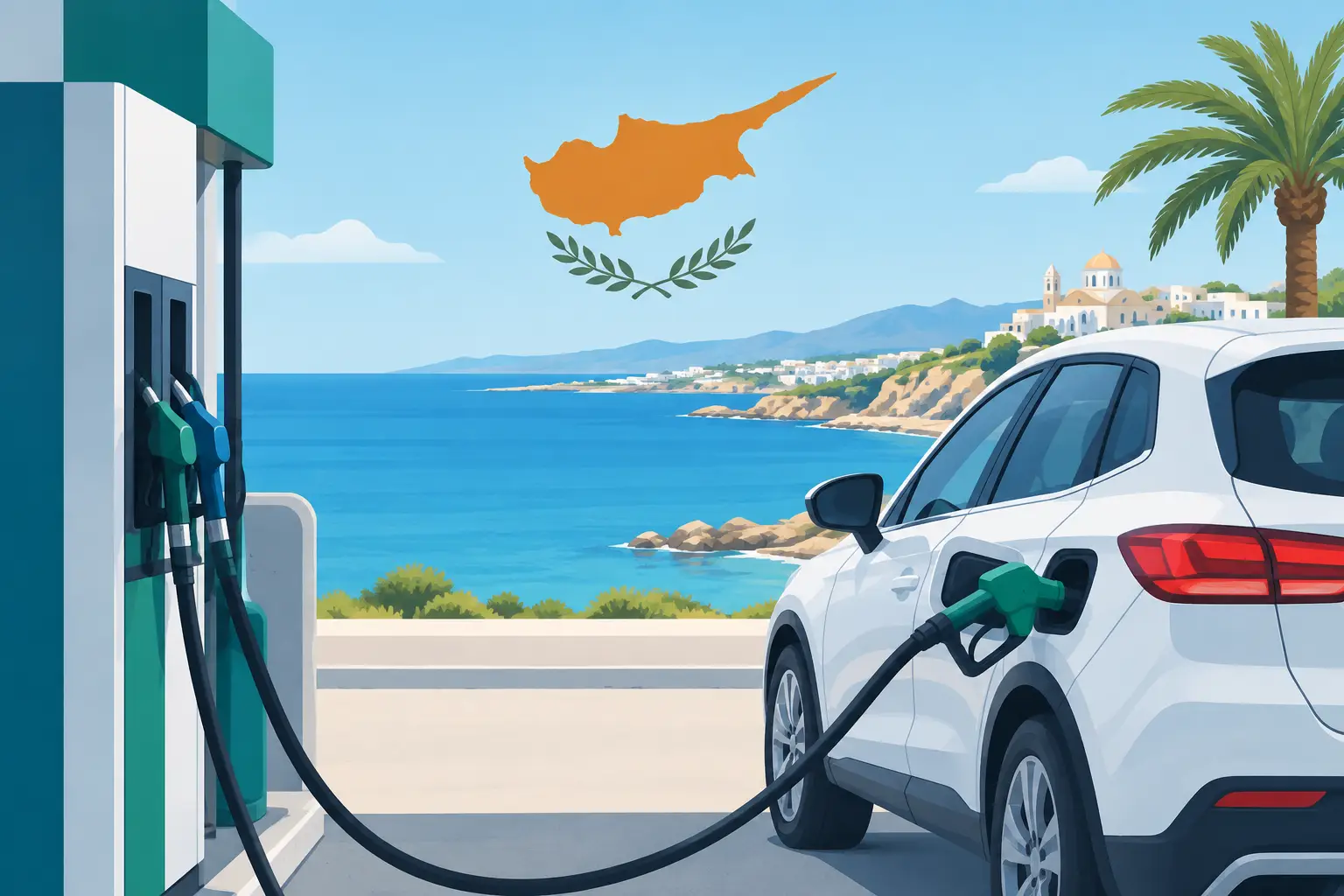
You have landed in Cyprus, collected your car, and are ready for the coast. Then, at return time, one small detail can create an unexpected charge: the fuel level. Rental fuel policies are easy to overlook during booking, but they affect what you pay, how much time you need before your flight, and whether the final bill feels as clear as the original price.
For most visitors, the best policy is simple: collect the car full and return it full. But the wording matters, airport timing matters, and a fuel gauge is not always as exact as it looks. Here is how to read the policy before you book and handle refueling without stress.
Why rental fuel policies matter
Fuel is not usually included in a short-term car rental price. The rental company provides the vehicle with a stated fuel level, and you pay for the fuel you use. The potential extra cost comes from returning the vehicle with less fuel than required.
That charge can be higher than the pump price because it may include a refueling service fee. This is not necessarily a hidden fee if it is shown in the rental terms, but it is a cost travelers can often avoid with a quick stop at a gas station before drop-off.
Cyprus is easy to explore by car, but distances add up. A few days of beaches, villages, mountain roads, and restaurant trips can use more fuel than expected. Knowing the policy in advance helps you budget properly instead of guessing at the end of your vacation.
The main rental fuel policy options
Full-to-full: the clearest choice
With a full-to-full policy, you receive the car with a full tank and return it with a full tank. You only pay the gas stations directly for the fuel you use. It is usually the most transparent option because there is no need to estimate how much fuel is left in the vehicle or prepay for a tank you may not finish.
Before leaving the pickup point, check that the dashboard shows full fuel. If it does not, take a photo and tell the rental representative straight away. The same applies when you return the car: refuel close to the airport or delivery point, keep the receipt, and take a photo of the gauge with the engine running if possible.
Full-to-full works especially well for travelers who want predictable trip costs. It also gives you control. You choose where to refuel and what you spend, rather than accepting a supplier-set fuel price.
Same-to-same: convenient for short trips
A same-to-same policy means you return the vehicle at approximately the fuel level you received. For example, if the car is delivered with three-quarters of a tank, you return it with three-quarters of a tank.
This can be practical for a short stay, but it requires a little more attention. Fuel gauges move in segments rather than exact liters, and driving away from the gas station can make the level appear lower or higher depending on the road slope. If you received the car below full, photograph the gauge at delivery and ask for the starting level to be recorded clearly.
Avoid trying to return the car with the exact minimum amount. A small extra amount of fuel is generally cheaper than a refueling charge. The goal is not to use every drop. The goal is to return the car confidently and on time.
Prepaid fuel: simple, but not always the lowest cost
Some rental companies offer prepaid fuel. You pay for a full tank at pickup and may return the car as empty as you like. It can save time before an early flight, particularly if your itinerary is busy until the final hour.
The trade-off is that unused fuel is often not refunded. If you are staying near Paphos, Larnaca, or Limassol and will only drive locally, you may leave a meaningful amount in the tank. Check both the per-liter price and whether any unused fuel is reimbursed before choosing this option.
Prepaid fuel may suit travelers planning a long road trip across the island. For most shorter vacations, full-to-full is usually easier to compare and better for budget control.
Full-to-empty: read the price carefully
Under a full-to-empty policy, the company charges for a full tank at the start and you return the car as empty as possible. This sounds convenient, but it can be difficult to use an entire tank without risking running low on fuel before return.
If the price includes a service charge or the unused fuel is not refunded, it can cost more than filling up yourself. This option is worth considering only when the terms are very clear and you are comfortable with the likely total cost.
What to check before you accept the keys
Fuel terms should be visible before you commit to a booking. Look for the stated policy, the starting fuel level, and the charge that applies if the car is returned below the agreed level. If the wording is vague, ask for a clear answer in writing before your trip.
At delivery, take a minute to inspect the car. Confirm whether it uses gasoline or diesel, check the gauge, and photograph the dashboard. This is useful for any rental, even one with a traveler-friendly process. It creates a simple record and lets you start your journey without uncertainty.
Also ask where the return or airport handover will take place. If you need to refill just before returning the car, you will want enough time to find a nearby station, refuel, and reach the meeting point. Do not leave it until the last few minutes before a flight.
A rental that offers full insurance and no deposit can remove two major travel worries, but fuel terms should still be equally straightforward. MasCars focuses on that kind of clarity, with automatic cars and free airport delivery designed to make arrival simpler.
How to refuel in Cyprus without last-minute pressure
Gas stations are common around cities, airports, and major routes, although options can be less frequent in rural and mountain areas. If your fuel level is around one-quarter, it is sensible to refill before heading into the Troodos Mountains or taking a longer coastal drive.
Make sure you select the correct fuel type. The fuel cap, dashboard, rental documents, or vehicle key tag may identify it, but if you are unsure, stop and ask the station attendant. Putting the wrong fuel in a car can cause serious damage and is far more expensive than a few minutes spent checking.
For a full-to-full return, refuel at a station reasonably close to your return point. There is no universal distance rule, so use common sense: filling up days earlier and then driving across the island may leave the gauge below full. Keep the receipt because it shows the time, location, and amount purchased.
Do not overfill the tank. Stop when the pump automatically clicks off. Overfilling can cause spills and is unnecessary. If the gauge takes a moment to update after refueling, drive a short distance safely and check it again before continuing to the airport.
Avoiding avoidable fuel charges
Most fuel disputes come down to rushing, not bad intent. Build 20 to 30 minutes into your return plan for refueling, traffic, and locating the correct meeting point. This is particularly helpful when returning a vehicle for an early-morning departure or after a long day of driving.
Save a photo of the return gauge and your final fuel receipt until you are home. If a question arises later, you have a clear record. If the representative checks the vehicle with you, confirm that the fuel level has been accepted before you leave.
It is also wise to distinguish fuel charges from other rental costs. A low advertised daily rate can look attractive, but the final value depends on insurance coverage, deposits, airport delivery fees, mileage limits, and fuel terms. A transparent rental is one where you can understand the likely total before arriving in Cyprus.
Choose the policy that fits your itinerary
If you want the most control, choose full-to-full. If you have a very short route and the vehicle is delivered partly filled, same-to-same may be perfectly practical. Prepaid and full-to-empty options can save time, but only when their pricing works for the miles you expect to drive.
The best approach is simple: read the fuel policy before booking, photograph the starting level, and schedule one calm fuel stop before return. That small bit of planning leaves more room for the part of your Cyprus trip that matters - enjoying the drive.