Rental Insurance Exclusions Drivers Should Know
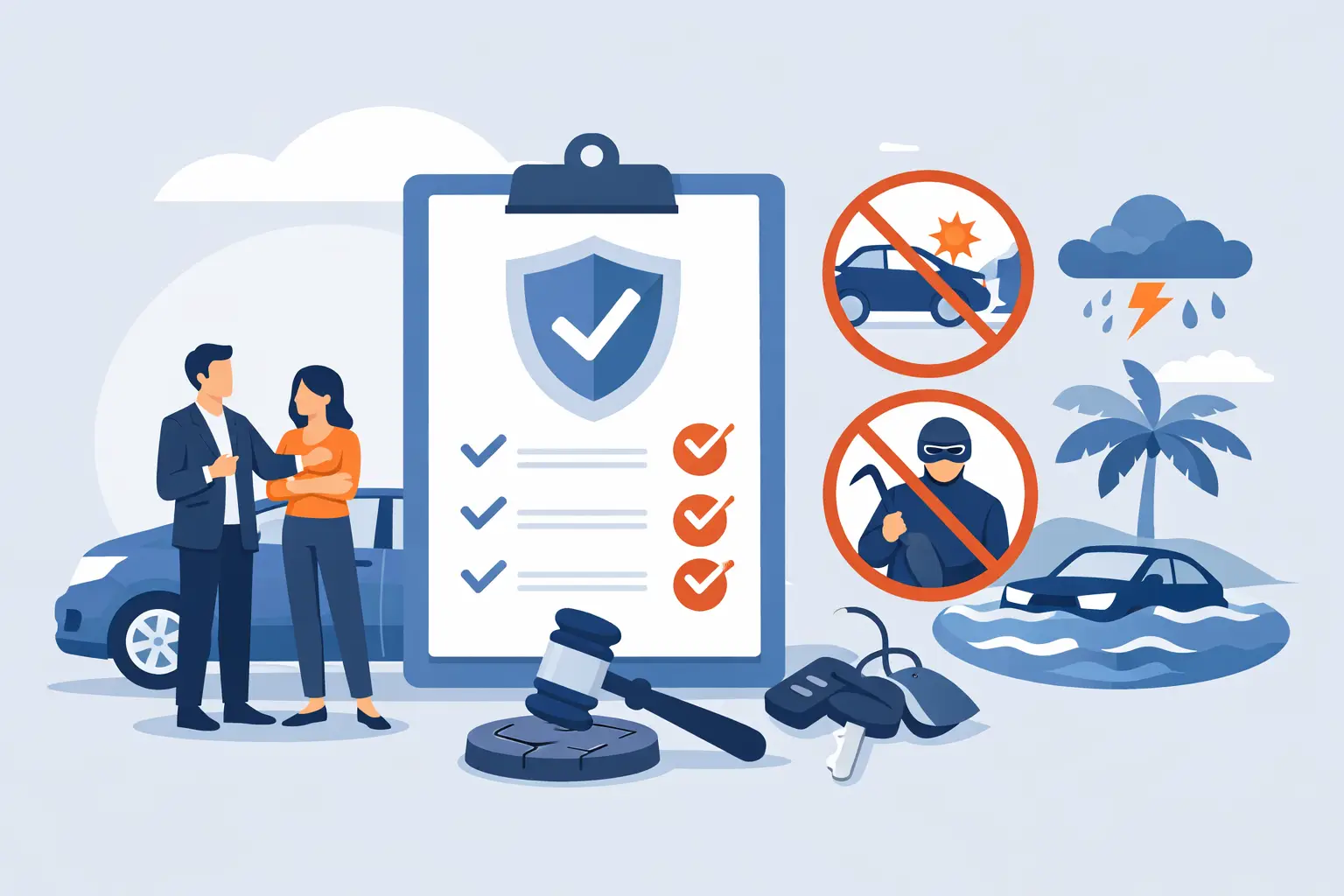
A rental car can make Cyprus wonderfully easy: collect your automatic car at the airport, load the bags, and head straight to the beach, mountains, or your hotel. But rental insurance exclusions can still create an expensive surprise if you assume that “fully insured” means every possible situation is covered. The practical approach is simple: know what the protection includes, what it leaves out, and what you are expected to do if something goes wrong.
Insurance language can feel designed to slow down a booking. It should not. A clear rental agreement tells you which damage, incidents, drivers, and roads are covered. If any part is vague, ask before confirming. That is far easier than trying to resolve a charge after your flight home.
What are rental insurance exclusions?
An exclusion is a situation, part of the vehicle, cost, or type of use that the rental insurance does not cover. It does not automatically mean the rental company is being unreasonable. Some risks are hard to insure, preventable, or outside normal tourist use. The issue comes when a traveler sees the word “insurance,” skips the terms, and assumes there can be no financial responsibility at all.
For example, collision protection may cover damage to the main body of the car after an accident, while excluding tire damage caused by driving over sharp rocks. Theft protection may apply if a vehicle is stolen, but not if the keys were left inside an unlocked car. Coverage also usually depends on following the rental agreement.
The exact terms vary by provider, vehicle, and booking package. Never rely on a general article, a travel forum, or the insurance wording from a rental you used in another country. Cyprus rentals have their own terms, and the contract for your specific booking is the one that matters.
The exclusions travelers most often miss
Tires, wheels, glass, and the underside
These are among the most common gray areas in car rental coverage. A scrape on a door is visible and easy to understand. A damaged wheel, punctured tire, cracked windshield, or scraped underside may be treated differently, depending on the policy.
This matters in Cyprus because some scenic areas involve narrow lanes, uneven parking edges, gravel pull-offs, or rougher access roads. Do not take a standard rental car onto terrain it is not approved for, even if a navigation app suggests it as a shortcut. A cheaper route can become a very costly detour.
Before leaving the airport or delivery point, take clear photos and a short video of the wheels, windshield, bumpers, roof, and lower visible edges. Report existing damage immediately. This takes two minutes and gives both you and the rental company a reliable record.
Unauthorized drivers
Insurance typically applies only when the person driving is named on the rental agreement and meets the age and license requirements. Letting a friend, partner, or family member take the wheel “just for a few minutes” can create a serious problem if there is an accident.
If you expect to share driving, arrange it before the rental starts. Do not assume a spouse or travel companion is automatically included. It depends on the company’s terms and the protection package.
Driving under the influence or illegally
No legitimate insurance package is likely to protect a driver who is impaired by alcohol or drugs, racing, driving recklessly, or breaking the law. The same applies to using the vehicle for prohibited purposes, such as paid passenger transport, towing without authorization, or carrying more people than the car is designed for.
This is not fine print to negotiate around. It is the basic condition behind every rental agreement: use the car responsibly and legally.
Wrong fuel, lost keys, and interior damage
Many travelers focus only on collision damage, then overlook costs that are not caused by a typical road accident. Filling the car with the wrong fuel, losing a key, damaging the interior, smoking in a non-smoking vehicle, or returning the car exceptionally dirty may not be covered by standard insurance.
These situations are usually avoidable. Check the fuel type at pickup, keep the keys in a secure place, and treat the car as you would your own. If you are traveling with children, check for snacks, sand, wet swimwear, and small items under the seats before return.
Negligence after an incident
Insurance can be affected by what you do after damage or an accident. Failing to notify the rental company, leaving the scene when you should remain, not reporting a serious incident to the police, or continuing to drive a car that is unsafe can all complicate a claim.
Save the rental company’s contact details in your phone before setting off. If something happens, take photos, note the location and time, collect the other driver’s details where relevant, and contact the provider promptly. A fast report is usually the best way to protect everyone involved.
Cyprus-specific points worth checking
Cyprus drives on the left, which can take a day or two to feel natural for visitors from the United States and much of Europe. Roundabouts, turns, and parking maneuvers are the moments when many travelers need to slow down. A minor scrape can happen when your road habits are still catching up.
You should also check where the vehicle may be driven. Some rental agreements restrict travel to particular areas, border crossings, unpaved roads, or certain mountain tracks. Do not make assumptions based on what appears accessible on a map. Ask before you go, especially if your plans include remote beaches, mountain villages, or travel near restricted areas.
Parking rules deserve attention too. Parking damage, towing costs, fines, and penalties are commonly the renter’s responsibility, even when collision insurance applies. Read signs carefully, use legal spaces, and allow extra time in busy resort areas.
How to read insurance terms without getting stuck in the details
You do not need to become an insurance expert. You only need answers to a few direct questions before booking:
- What damage is included in the stated insurance?
- Are tires, wheels, glass, roof, and underside included or excluded?
- Is there an excess, deductible, deposit, or card hold if damage occurs?
- Who is allowed to drive, and are additional drivers included?
- Which roads, areas, or uses are prohibited?
- What should I do immediately after an accident, breakdown, theft, or vandalism?
If the answers are easy to find and easy to understand, that is a good sign. If the pricing looks low but the insurance terms are unclear, the booking may not be as predictable as it first appears.
A no-deposit rental can reduce one major travel headache because you are not tying up a large amount of available credit for the duration of your trip. Still, no deposit does not mean you should ignore the agreement. It means the provider should make the protection and responsibility terms clear from the start.
Choose clarity over a cheap headline price
The lowest daily price is not always the lowest-cost rental. A deal can look attractive until it adds a large security hold, a high excess, a mandatory insurance upgrade at the counter, or exclusions that only appear after you arrive.
Look for a rental experience that states the essentials upfront: automatic vehicle, insurance status, deposit policy, delivery details, and support if plans change. MasCars, for example, focuses on fully insured, no-deposit automatic rentals with free airport delivery, helping travelers avoid the usual counter pressure and unclear add-ons.
Before you drive away, inspect the car, save the support number, and make sure every approved driver is on the agreement. Then enjoy the part of the trip you actually came for: taking the coast road at your own pace, stopping where you want, and knowing there are no avoidable surprises waiting at return.