Cyprus Parking Rules Guide for Rental Drivers
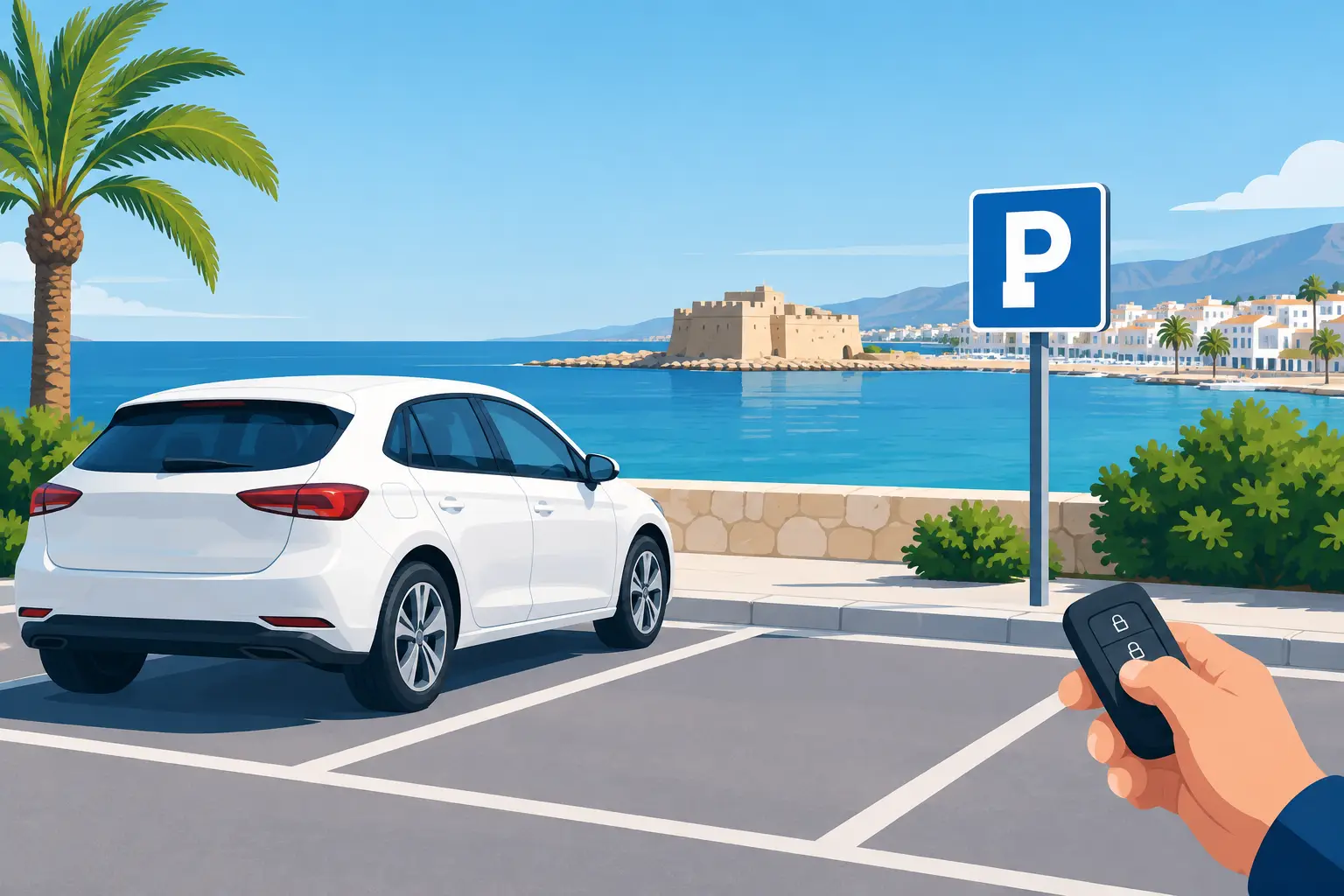
A great beach, a mountain village lunch, or an old-town walk can turn stressful quickly if you return to a parking ticket or find your rental blocked in. This Cyprus parking rules guide gives you the practical basics: where you can park, what road markings mean, how paid parking works, and the mistakes visitors should avoid.
Cyprus is easy to explore by car, but parking rules are enforced differently depending on the municipality, the season, and the location. Larnaca, Limassol, Paphos, Nicosia, and popular resort areas all have their own parking zones and payment systems. The safest approach is simple: read the sign at the exact place you plan to leave the car, not the one you saw around the corner.
Cyprus Parking Rules Guide: Start With the Road Markings
Road markings are often the quickest clue that a space is restricted. Cyprus follows many familiar British-style road rules, but visitors should avoid making assumptions based only on what they are used to at home.
Yellow lines at the edge of the road matter. A double yellow line generally means no parking at any time. A single yellow line usually indicates a parking restriction during certain hours, which should be shown on a nearby sign. Do not treat a quiet street or an empty curb as permission to park. Restrictions still apply, even when there is little traffic.
Marked white bays are usually intended for parking, but they are not automatically free. A bay may be for paid parking, residents, taxis, hotel guests, loading vehicles, or drivers with a disabled parking permit. Check the sign or payment machine before walking away.
Avoid parking on sidewalks, pedestrian crossings, corners, bus stops, taxi ranks, loading areas, or in front of driveways. Even where a curb is wide enough for a car, leaving your vehicle on a sidewalk can obstruct pedestrians, wheelchairs, and strollers. That is the kind of parking choice most likely to cause a complaint or an enforcement issue.
Blue, disabled, and reserved spaces
Blue-marked spaces are commonly reserved for drivers displaying a valid disabled parking permit. Do not use them for a quick stop, even if the space is empty and even if you plan to stay in the car. Reserved spaces near hotels, supermarkets, and attractions are regularly monitored.
You may also see spaces marked for taxis, deliveries, police, or specific businesses. These are not flexible parking options for rental drivers. If the marking is unclear, choose another space rather than risk a fine or a difficult conversation with local enforcement.
Paying for Parking in Cyprus
Paid street parking is common in busy city centers, seafront areas, and around major attractions. The system varies by town. You may find a ticket machine, a parking meter, a municipal app, a private operator, or an attendant.
Before paying, check three things: the permitted parking period, the operating hours, and the payment instructions. Some zones charge only during business hours, while others apply later into the evening or on weekends in busy areas. A machine that is not charging at that moment does not mean the entire space is free all day.
Keep your ticket visible if the machine requires a paper display. If you pay through an app, make sure the vehicle plate number and parking zone are correct. A payment made for the wrong zone or wrong license plate may not protect you from a ticket.
Private parking lots are often the easiest choice near beaches, marinas, old towns, and shopping areas. They can cost more than street parking, but they may save time during peak summer months. That trade-off is often worth it when you are traveling with children, carrying beach gear, or trying to make a restaurant reservation.
Cash, cards, and parking apps
Do not rely on one payment method. Some machines accept coins and cards, while others may be app-based or have limited functionality. Keep a small amount of cash available, especially when visiting smaller towns or rural locations.
If a payment machine is out of service, look for another machine nearby or follow the instructions displayed on it. Do not assume a broken machine gives you free parking. In some cases, the sign will direct you to an app or another payment point.
Where Visitors Commonly Get Caught Out
The most common parking problem in Cyprus is not a lack of spaces. It is choosing the convenient-looking spot without checking the rules. This happens most often in old-town streets, near promenades, outside restaurants, and close to popular beaches.
In Nicosia, city-center spaces can be limited during working hours. In Limassol, beachfront and marina areas become especially busy in the evening and on weekends. Larnaca’s seafront can fill quickly, while Paphos parking may be tight around the harbor and archaeological sites. Arriving 15 to 20 minutes earlier can be far less stressful than circling narrow streets looking for a free space.
At beach areas, use designated lots where possible. Parking on sandy shoulders, rough ground, or unofficial roadside pull-offs can create problems even if other cars are already there. You may block access, damage the vehicle, or find that the space is on private land.
In villages, be respectful of narrow roads and local access. A car parked slightly too far from the curb can prevent a delivery truck, bus, or resident from passing. If the road is narrow enough that you would be uncomfortable meeting another car, it is probably not a good place to park.
Airport, Hotel, and Resort Parking
Cyprus airports have designated pickup, drop-off, and parking areas. Follow the signs carefully, particularly at arrivals. Stopping in a drop-off lane longer than permitted can lead to enforcement, even if you are waiting for someone to come outside.
If you are collecting a rental car at the airport, confirm the handover instructions before landing. A service with free airport delivery removes the need to search for a rental desk or pay for extra airport transfers. MasCars offers automatic cars that are fully insured, with no deposit and free airport delivery, so you can start the trip with a clear plan rather than a parking-lot scramble.
At hotels, ask whether guest parking is included and whether a space must be reserved. Resort parking can look informal, but hotels may issue permits or use plate recognition. Never assume a hotel entrance, fire lane, or loading space is acceptable for overnight parking.
What Happens If You Get a Parking Fine?
Parking enforcement may be handled by police, municipal authorities, or private operators. A ticket can be placed on the vehicle, issued through a local authority, or connected to the rental company through the car’s registration details.
Do not ignore a parking notice. If the fine is linked to a rental vehicle, the rental provider may receive the notice later and contact you. There may also be an administrative handling process depending on the rental agreement. Taking a photo of the ticket, the signs, and the parking location is helpful if you need to review what happened.
Fine amounts and procedures can change, so there is no sensible reason to gamble on a restricted space for the sake of a short walk. Paid parking is usually much cheaper than the disruption of dealing with a penalty during or after your vacation.
A Few Driving Habits That Make Parking Easier
Remember that Cyprus drives on the left. When you pull into a roadside space, take an extra second to check that you are parked in the correct direction and not obstructing traffic. On narrow streets, fold mirrors if appropriate after parking and leave enough clearance for passing vehicles.
Use your phone’s map only after you are safely parked. It is tempting to stop briefly while searching for a hotel, beach entrance, or restaurant, but a brief stop in a restricted lane can still create a problem. If you miss a turn, keep moving and find a legal place to pull over.
Parking in Cyprus is usually straightforward when you slow down, read the local signs, and choose designated spaces over convenient shortcuts. A few extra minutes at the start of a stop protects the rest of your day for the places you came to see.