How to Inspect Rental Car Damage Before You Drive
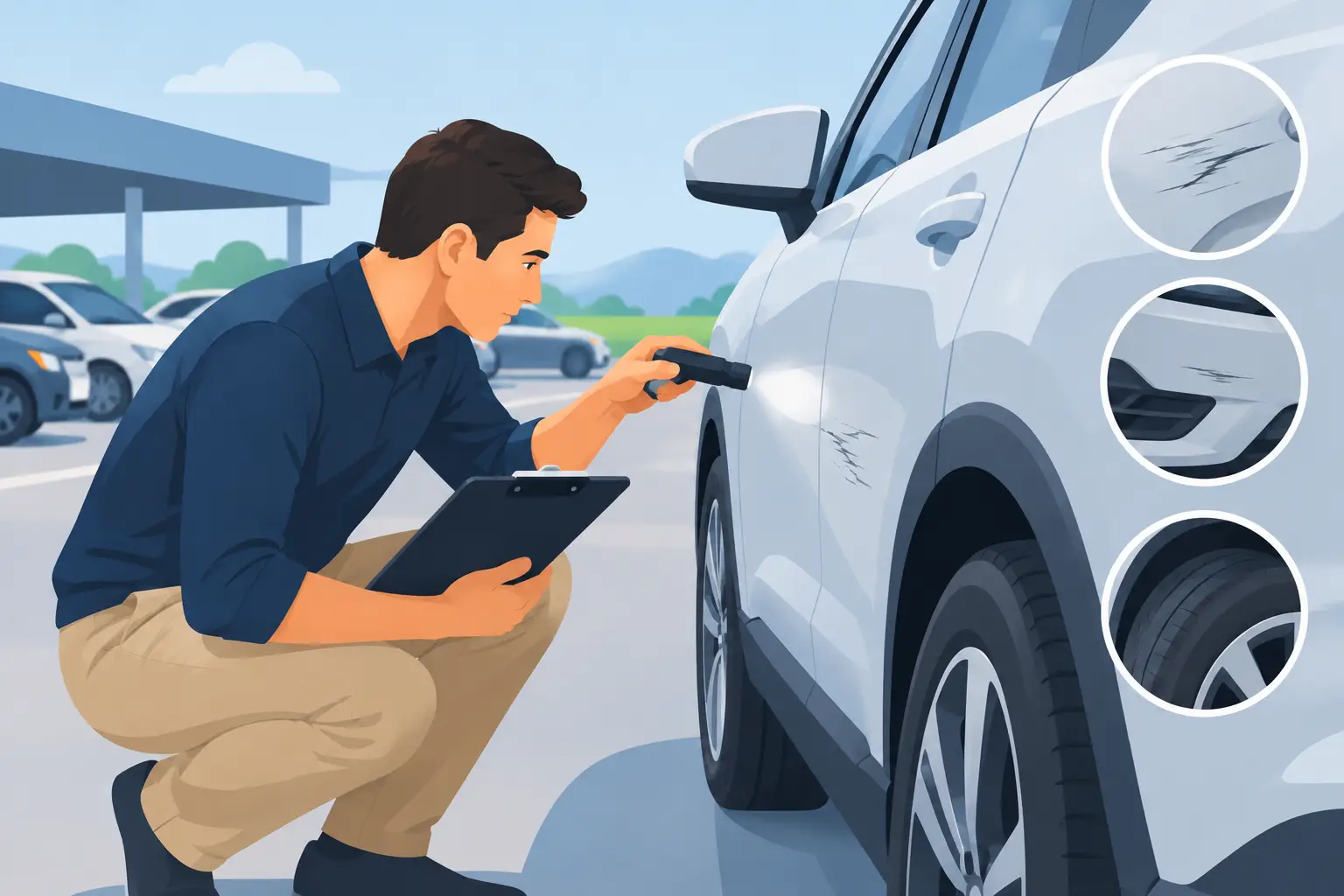
A five-minute check in the airport parking lot can save a frustrating conversation at the end of your Cyprus trip. Before you load bags, connect your phone, or head toward the coast, take time to inspect rental car damage and document what you find.
This is not about expecting problems. It is about starting your rental with a clear record of the car’s condition. A transparent provider should make this easy, especially when the vehicle is delivered to the airport or your accommodation. Good photos, a quick walk-around, and a confirmed damage report give you confidence from the first mile.
Why the pickup inspection matters
Rental cars are used by many travelers, often on busy routes, narrow village streets, and crowded hotel parking lots. Small scuffs, stone chips, curb marks, and interior wear are normal. The issue is not whether a car has any marks. The issue is whether existing marks are clearly recorded before you drive away.
A proper inspection protects both sides. The rental company has an accurate starting condition, and you do not have to worry that an old scratch will be mistaken for new damage. It is particularly useful when pickup is fast, you arrive late, or you are traveling with children and want to get on the road quickly.
Full insurance and no-deposit rental terms reduce much of the usual car rental stress, but they do not replace common sense. Check the rental terms for what is covered and any reporting requirements. For example, a new incident may need to be reported promptly, even if the vehicle is fully insured.
How to inspect rental car damage at pickup
Do the inspection while the delivery representative is present whenever possible. Daylight is best, but a phone flashlight works well for an evening airport arrival. You do not need mechanical expertise. Your goal is to spot visible condition issues and make sure they are recorded.
Start by taking a slow video from a few steps away. Walk around the entire vehicle once, filming each side, the front, the rear, the roofline, and the wheels. Then take close photos of anything that stands out. Keep the original files on your phone until the rental is complete.
A short, methodical check is more useful than dozens of random photos. Pay attention to these areas:
- Body panels and bumpers: Look for scratches, dents, paint transfer, cracked plastic, and loose trim. Photograph each mark close up, then take one wider image that shows where it is on the vehicle.
- Windshield, windows, and lights: Check for chips, cracks, broken lenses, and fogged or damaged headlights. A tiny windshield chip can be easy to miss in low light.
- Wheels and tires: Look for curb rash, tire sidewall cuts, low tire pressure warnings, and visibly uneven tires. Cyprus has plenty of scenic roads, but curbs in parking areas can be tight.
- Interior and equipment: Check seats, dashboard warnings, mirrors, air conditioning, fuel level, charging cables if supplied, and the spare tire or repair kit if applicable.
- Keys and documents: Confirm that you have the correct keys and any required vehicle documents. If there is a digital handover, save the confirmation message or condition report.
Do not forget the roof, especially if you are renting a taller vehicle. It is often missed during a quick walk-around, yet branches, low parking structures, and luggage handling can leave marks there.
Match your photos to the condition report
If the company provides a paper or digital damage diagram, compare it with the vehicle rather than simply signing it. Existing damage should be marked clearly enough that there is no doubt about its location. A note such as “scratch on left rear door” is more useful when paired with a photo showing the size and exact panel.
If you find something that is not listed, point it out before leaving. Ask for the report to be updated, or send the photos through the agreed booking channel and request written acknowledgment. WhatsApp is convenient for this because it creates a timestamped message trail, but use the contact method supplied for your rental.
Small marks may not need a lengthy discussion. What matters is having a record. A reliable rental provider should not make you feel awkward for asking to document the car properly.
Check more than cosmetic damage
Visible marks are the main focus, but take a minute to confirm that the car is ready for the road. Start the engine and check for warning lights that remain on after startup. Test the air conditioning, indicators, brake lights if someone can assist, wipers, and power windows.
Set the mirrors and make sure you understand the controls before driving away. Visitors from the United States should also remember that Cyprus drives on the left. Taking a calm minute at pickup to adjust the seat, mirrors, and navigation can make the first few minutes of driving much easier.
Check the fuel level against the handover record. If the car is supplied with a certain fuel level, photograph the gauge. The same applies to an electric or hybrid vehicle’s battery charge. This takes seconds and avoids uncertainty at return.
What to do if you find new damage during your trip
If something happens, stop safely and take clear photos of the vehicle, the location, and any other vehicle involved. Include wide shots as well as close-ups. If there is a collision, injury, theft, or significant damage, follow the local reporting steps in your rental agreement and contact the rental provider promptly.
Do not wait until return to mention a new incident. Early reporting gives the company a chance to help, arrange support if needed, and explain the next step under your insurance terms. Keep messages factual: what happened, when it happened, where you are, and whether the car is safe to drive.
For minor parking damage, the right approach depends on the rental terms and the extent of the issue. Still, photos and prompt communication are almost always the sensible choice. Trying to hide damage creates unnecessary stress and can complicate an otherwise straightforward situation.
Inspect the car again before return
The return inspection matters nearly as much as pickup. Before meeting the driver or leaving the car at the airport, make another quick video walk-around. Capture the fuel gauge, mileage, interior, wheels, windshield, and every body panel. Remove all personal items, including charging cables, sunglasses, child-seat accessories, and items tucked under seats.
If you parked under trees or near the beach, brush off leaves and sand so the exterior is visible. This is not about detailed cleaning. It simply makes the car’s condition easier to assess fairly.
When returning through airport delivery, take your final photos after parking in the agreed location. Include a wider shot that shows the vehicle and, if relevant, the parking area. Save the handover confirmation once the return is completed.
Avoid the rush that causes missed details
The biggest inspection mistake is feeling pressured to leave immediately. Build ten extra minutes into your arrival plan. That small buffer is especially valuable after a flight, when you may be tired, managing luggage, or eager to reach your hotel.
At MasCars, the simple model of automatic cars, full insurance, no deposit, and free airport delivery is designed to remove the usual rental friction. Still, a quick condition check is a smart travel habit with any provider. It gives you a clear starting point, helps keep communication simple, and lets you enjoy Cyprus with fewer what-ifs.
Take the photos, confirm the report, and then put your phone away. The best result is not a folder full of evidence. It is the peace of mind to focus on the drive ahead.